STRENGTHEN HEALTH SYSTEMS

The vast majority of people in South Africa are reliant on the public healthcare system. It’s an ailing system that at its best is under-resourced; at its worst it is severely dysfunctional. TAC is using community-led monitoring through Ritshidze to document and expose health system crises at a local level, to support our campaigns to turnaround the situation in the public healthcare system.

Our members are almost exclusively reliant on the public healthcare system. We believe that with well-informed and rights-based local activism we can create accountability at the frontline of healthcare service delivery, which will in turn lead to better quality healthcare services.

Ambulances & planned patient transport

TAC considers the time it takes for ambulances to arrive to be morally unacceptable. Too often ambulances take many hours to arrive, if they arrive at all. Critically ill patients and people with pregnancy complications are forced to wait, or to hire private transport at prices they cannot afford to take them to the nearest hospital. This leads to avoidable deaths in some instances. The reliability, availability and quality of emergency medical services must be urgently improved in the country.

Planned patient transport systems are also in crisis — impacting disproportionally on the most vulnerable and those in poor and rural settings. People in rural communities have a particularly difficult time accessing healthcare services — only made worse when transport is not available. In rural areas, many people must walk long distances to clinics and hospitals, or forfeit appointments, which may have long term consequences on their health, or on HIV treatment adherence and TB treatment completion rates.

Ambulances & planned patient transport

Budget justice

Without a doubt, the current crisis in the public healthcare system is linked to the slowing of health expenditure each year. Budget cuts, reduced allocations to provinces, and a continued public spending ceiling, undermine the provision of health services and the recruitment and retention of healthcare workers. South Africa’s commitment to austerity budgeting — and reduced overall spending on health — does not prioritise the rights of public healthcare users. Instead of cuts, additional funding is needed to fill vacancies and ensure more doctors, nurses and other healthcare workers can be hired.

TAC is a member of the Budget Justice Coalition (BJC), a coalition of like minded social justice organisations advocating for better understanding of budgets and more involvement from communities. .

Budget justice

Climate justice

Extreme weather events are becoming increasingly frequent in South Africa — as can be seen through flooding and droughts. These extreme weather events have caused loss of life, loss of housing, damage to infrastructure, food insecurity, and challenges with water supply. They have also exacerbated the crisis in our public healthcare system.

During the flooding, for example, some clinics were shut completely as they were overrun with water. This left some public healthcare users unable to access health services, and others being sent home without ARVs or other medicines. Facility infrastructure, files, equipment, and medicines were damaged. Road damage and closures meant some healthcare workers couldn’t even get to the clinic, not to mention vehicles delivering medical supplies.

Climate justice

Clinic Committees

In South Africa, governance structures in the form of clinic committees and hospital boards are intended to ensure community participation in the healthcare system at facility-level. They are provided for in South African law and are key to ensuring accountability and a successful HIV/AIDS and TB response.

They are the forums through which public healthcare users are meant to engage and take ownership over the health system, raise concerns, and ensure accountability at local, district, and provincial levels. The committees should be made up of a combination of community representatives and health professionals and allow community concerns to be heard and addressed. However, it cannot be claimed that clinic committees or hospital boards function effectively in any province. Too many lack a clear understanding of their role and responsibility and no financial resources are allocated to improve this situation. TAC is working to capacitate certain clinic committees, however the government needs to do much more to improve their functionality in areas where TAC doesn’t have a presenc.

Clinic Committees

Clinics in Crisis

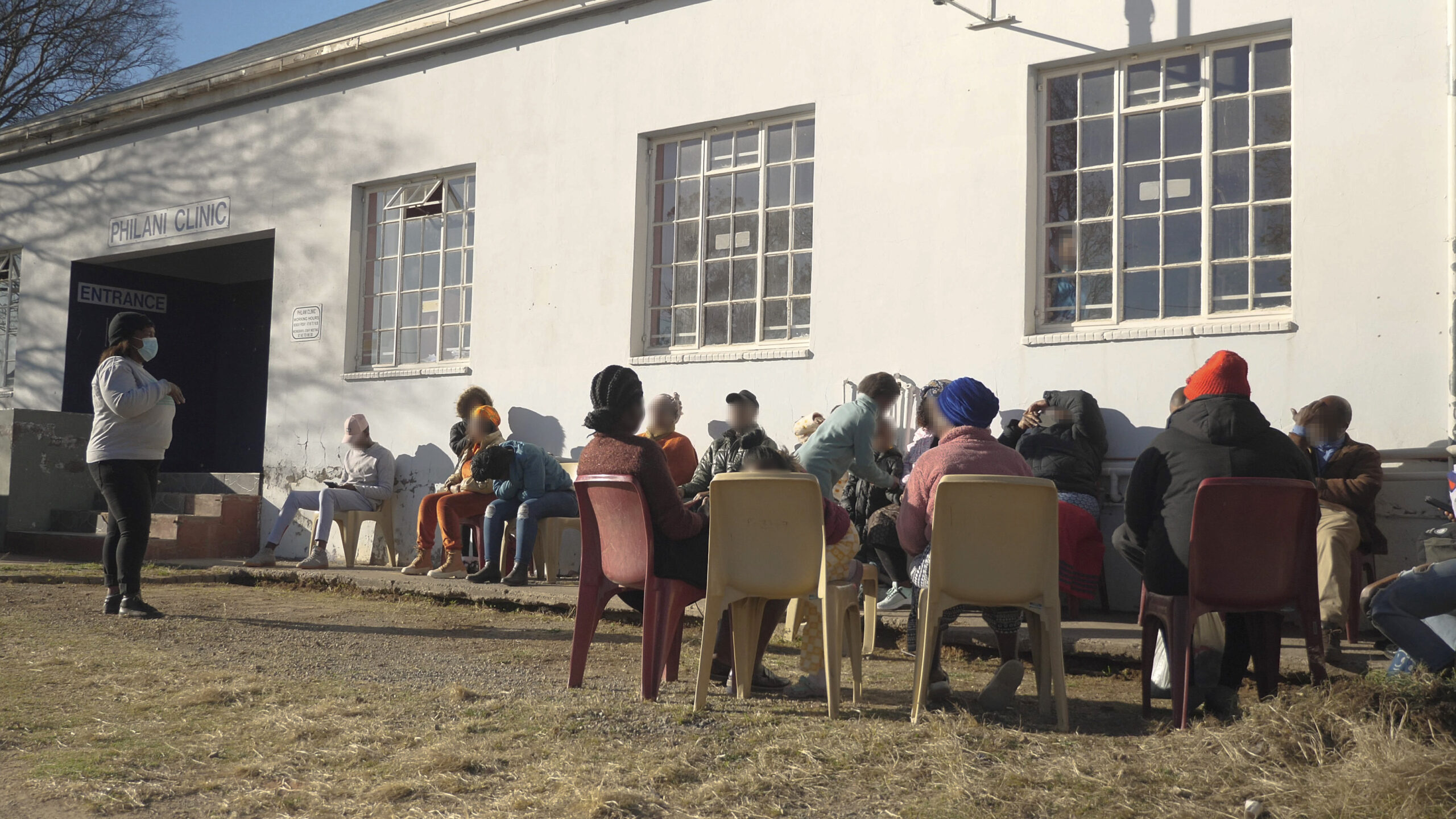
Often people start queueing outside clinic gates as early as 4am, only to wait all day, and in some cases never be seen. They get to the clinic, only to be sent home empty-handed without the medicines they need. Nurses are overworked and under-resourced. They shout at people. Doctors are scarce. People wait in overcrowded waiting rooms — or sit outside without shade or seats, even the elderly or sick. When they eventually get seen, in some clinics there is no privacy and other people can see or hear their consultations.

People who are late for appointments are sent to the back of the queue. Staff are openly hostile to people who use drugs, sex workers, and LGBTQIA+ communities — sometimes refusing people any services. Buildings are old and falling apart, with dirty or pit latrine toilets. Equipment is missing or broken. Files take hours to find or go missing altogether. People get TB because no one checks for TB symptoms or gives out masks to those coughing. The clinic committees that people rely on to solve these problems either don’t exist or don’t know what they should do. Our clinics are in crisis.

Clinics in Crisis

Healthcare Worker Shortages

The shortage of healthcare workers in the public sector is a crisis in South Africa that requires an urgent response. Ensuring that clinics and hospitals can provide quality health services depends mainly on having enough qualified and committed staff in place — including doctors, nurses, pharmacists, pharmacy assistants, community healthcare workers, lay counsellors, peer-educators, and even security guards and cleaners.

However, instead of filling vacant posts and ensuring that there are enough people to properly deliver our healthcare, posts remain frozen in many areas. While many doctors and nurses remain unemployed, there are not enough open positions to employ them. The problem is only exacerbated for rural communities who struggle to attract specialists and senior doctors. These shortages lead to long waiting times, longer hospital stays, higher numbers of deaths, and increased pressure on the few staff in place. A gap remains between the staffing needed to ensure high quality services and the staff present each day at site level. TAC works with partner organisations to address this crisis through seeking adequate resourcing for health and optimal expenditure of finances.

Healthcare Worker Shortages

Migrants & anti-xenophobia

TAC supports Section 27 of the South African Constitution, which affords everyone the right to have access to health care services, including reproductive services. This includes migrants, stateless persons and transient populations.

However, too often migrants and people without IDs can be denied access to healthcare services — and asylum seekers, undocumented migrants, transient people, and stateless people are being excluded from the proposed National Health Insurance (NHI). TAC remains committed to fight against xenophobia and the discrimination of migrants.

Migrants & anti-xenophobia

NHI

TAC supports the establishment of a universal health coverage system in South Africa. The aim to make healthcare funding more equal and accessible to all, underpins the values of life, dignity, social solidarity, and risk-sharing that TAC fully believes in and supports. TAC considers a progressive and effectively structured and implemented national Health Insurance (NHI) system to be essential to the achievement of universal health coverage in South Africa in the medium to long term. We maintain that the NHI does not achieve this objective in its current form.

The NHI will not in itself solve the dysfunction plaguing our public healthcare system in many provinces. It is hard to see how NHI could work if uncommitted people continue to be appointed to influential positions in our public healthcare system — and the failure to put in place adequate checks and balances for the exercise of power also inevitably risks corruption. NHI must go hand-in-hand with a new era of professionalism and an end to cadre-deployment.

NHI

People’s Health Manifesto

Many of the bottlenecks standing in the way of fixing our healthcare system are political. Often, politically appointed MECs for health simply lack the competence, commitment, or political will to address the very serious problems plaguing our healthcare system.

In response to this dynamic, ahead of the 2014 national elections and 2021 local elections, TAC began consulting widely with our members and partner organisations to develop the ‘People’s Health Manifesto’. These manifestos were informed by key concerns from the ground and contained key questions that were put to political parties contesting the national elections in South Africa. The manifestos were able to put the crisis in the public healthcare system onto the political agenda — and we are using the responses to hold these political parties accountable.

People’s Health Manifesto

They Stole From the People! Corruption Must Fall

The crisis in many of our public facilities does not come from nowhere. Over the last 15 years, corruption has flourished in South Africa and the public service has been systematically hollowed out. This has directly impacted the healthcare system and the HIV and TB response. 

Corruption and theft of public funds has been rampant even within the Department of Health, taking away much needed resources for hiring doctors and nurses, paying for ambulances, or fixing our clinics. 

The release of the SIU reported the misuse of R1.2 billion from health department coffers between 2007 and 2012 under former MEC of Health Brian Hlongwa’s watch as well as the misuse of R150 million in the Digital Vibes saga under the watch of former Minister of Health Dr Zweli Mkhize, are examples of just that. Clinics and Community Health Centres (CHC) are also not immune from this behaviour. 

Gross negligence is also pervasive. The actions of former MEC of Health Qedani Mahlangu resulted in the death of 144 people at Life Esidimeni. The inhumanity and callous disregard for the lives of others was shocking. She refused to accept responsibility for causing the worst tragedy this country has witnessed since the dawn of democracy. 

Medical negligence is also a worrying trend that we witness in clinics and hospitals across the country. Much of this negligence is avoidable, yet it can lead to disability, recurrent or new medical issues, extended hospital stays or re-admission, loss of income and at times, avoidable death. Many incidents have translated to malpractice claims which continue to cost the health department billions of rands — money that could be used to improve the quality of healthcare services.

Ultimately, as with all the issues we faced in the first phase of our struggle, the second phase is also fundamentally political. Government must be held accountable to introduce strict measures to prevent corruption and negligence, and to prosecute all those responsible for theft of public funds meant for healthcare, or for gross negligence. TAC will continue to publicly call out corruption and corrupt officials.

They Stole From the People! Corruption Must Fall

All Health System Strengthening News