TAC welcomes extra funds for health workers but is still concerned about fewer resources overall for health in the national budget speech
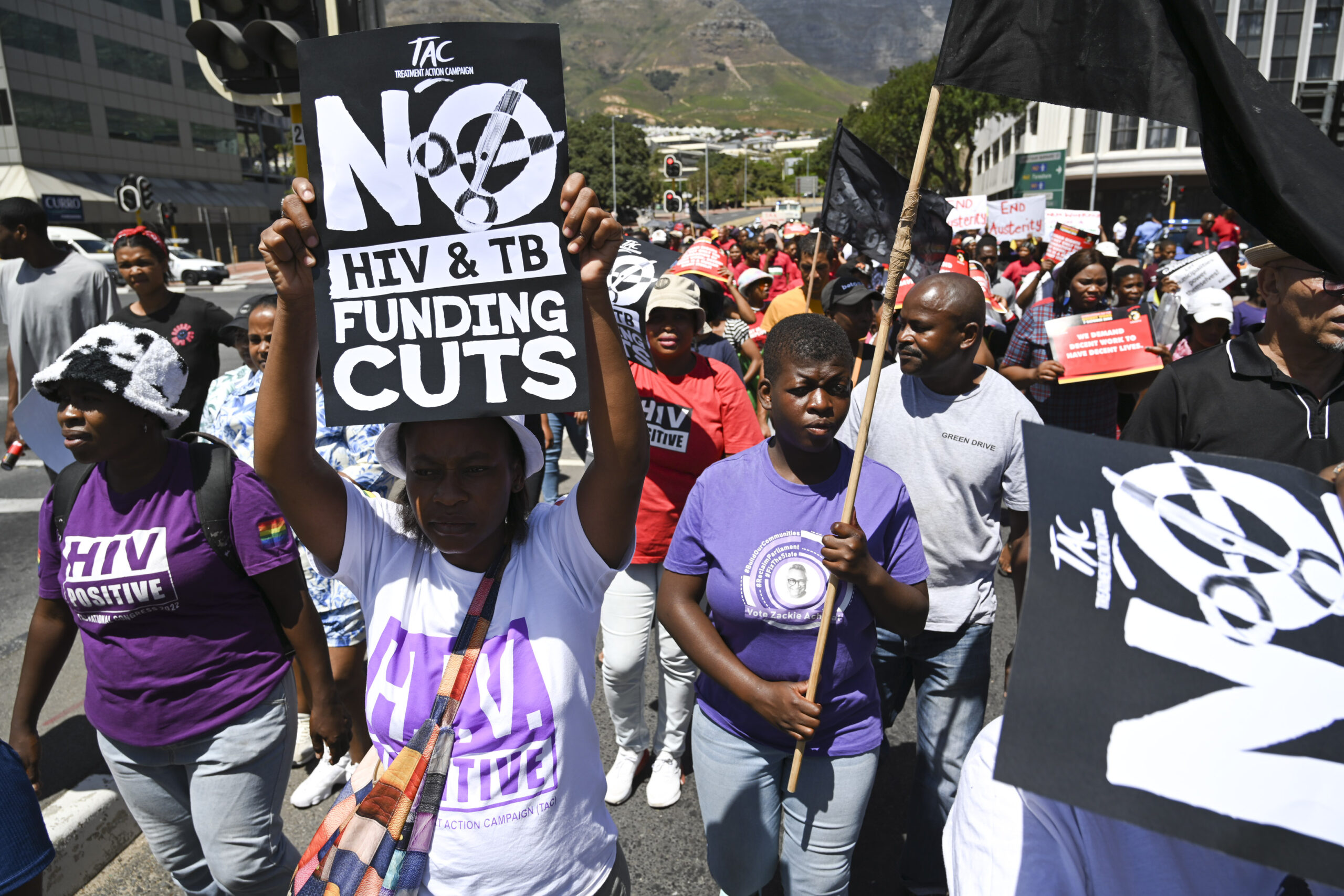
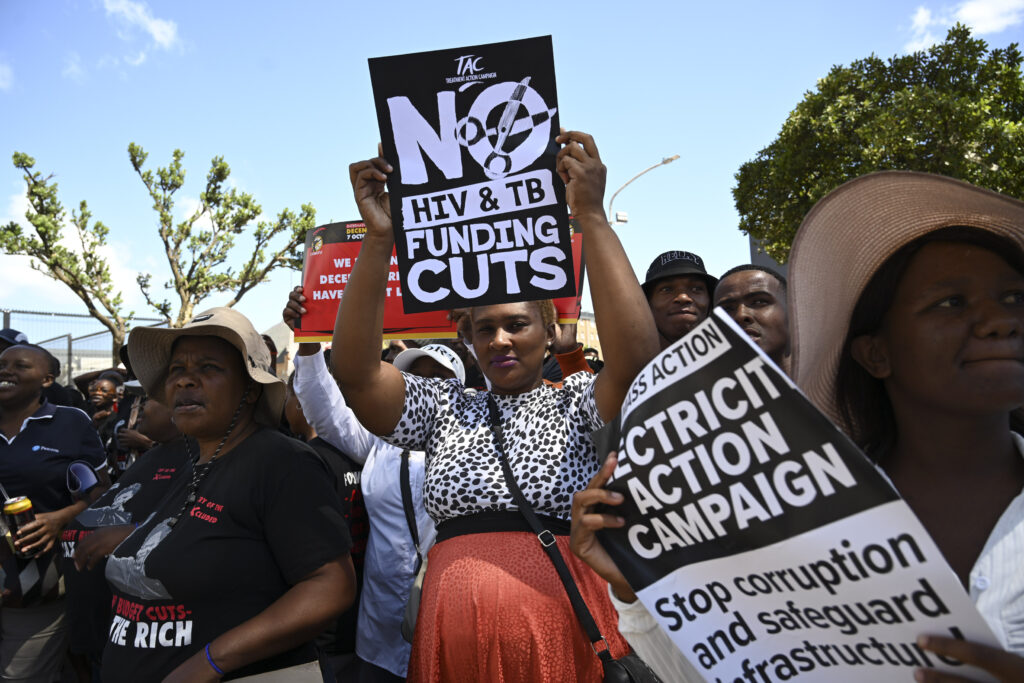
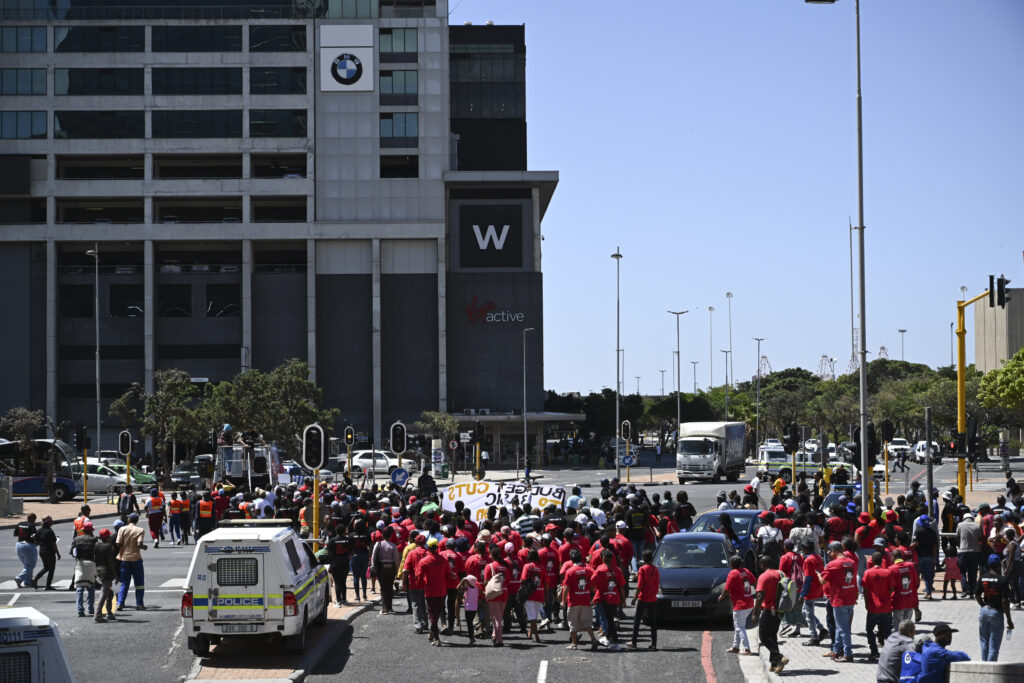
TAC members joined other organisations in Cape Town on Wednesday to march to the City Civic Centre in protest of budget cuts & austerity budgets impacting vulnerable communities, 21 February 2024. Photo: David Harrison
Johannesburg, 22 February 2024 – The Treatment Action Campaign (TAC) notes the tabling of the national budget by the Finance Minister, Enoch Godongwana, today. We acknowledge the tough trade-offs that had to be made for health. However, access to quality and affordable health has been deprioritised for too long in the country, despite health being the lifeblood from which the nation’s fortunes can be improved. Investing in health is to invest in South Africa’s present and future. At this critical time, when more human and financial resources would improve outcomes, this budget represents little respite in our quest to address the most pertinent ills in our society.
While we are relieved that this budget has prioritised safeguarding allocations towards health workers, we are very concerned that the health budget is set to shrink in real terms over the next three years, with a R23.7 billion baseline reduction. In the current multiple crises of unemployment, poverty, inequality and climate change, implementing harsh fiscal consolidation measures at the expense of investment in vital public services like health is self-defeating. Furthermore, austerity measures have hugely gendered impacts that impede the realisation of women’s and girl’s rights.
Despite concerns about the state of the country’s health facilities, the Health Facility Infrastructure Grant has been cut by R3.6bn over the next three years. It is important to note that investing in infrastructure is also an investment in job creation, something this country desperately needs.
Human Resources for Health (HRH)
Ritshidze data highlights the dire state of the healthcare system. For example, routine data collected in 414 primary health care facilities from 8 of South Africa’s 9 provinces between October and December 2023 shows that only 44% of healthcare users believed that there were always enough staff to cater for their needs. In comparison, only 24,6% of Facility Managers believed that they had enough staff to cater for health care users’ needs. Cadres of staff reportedly needed by Facility Managers include professional nurses (76%), enrolled nurses (48%), enrolled nurse assistants (38%), data capturers (34%), linkage officers (31%), cleaners (29%), pharmacists assistants (26%) and doctors (18%).
We welcome the R57,6 billion that the Treasury has made available for the state to pay for critical posts, including nurses, doctors, teachers and other critical services will go a long way in improving access to quality health care services. Furthermore, the increases to the provincial equitable share to allow for the protection of socio-economic rights, including health. However, we remain concerned that in the absence of a clear prioritisation this addition may perpetuate the maldistribution of capacity within and between provinces. We call on the Department of Health, in line with the provisions in the National Health Act, to involve patient user groups such as ourselves in establishing a prioritisation framework for equitable distribution of these posts. We will be engaging in advocacy at the provincial level.
Consistent complaints across Ritshidze surveys include long waiting times and staff attitudes, which are sometimes explained by health managers as a result of staff shortages. It is clear that broader assessment of human resource needs in the post-COVID era is required, particularly at primary health care level. It is important to note that reductions in key health metrics such as maternal mortality, TB testing and treating and the response to HIV/AIDS happen at primary level, so continued under investment could negatively impact the UNAIDS 95-95-95 targets.
Importantly, we note that the state has been advocating for a green economy. Investing in HRH goes some way to attaining this.
The HIV and TB response
We welcome the fact that the state has made a u-turn on its decision to cut R1.3 Billion a year on the District Health Programme Grant, which is pivotal in monitoring the HIV response. We hope that the National Department of Health (NDoH) will work with the various provinces to ensure that they spend the money efficiently in order for South Africa to reach its 95-95-95 targets. We call on the NDoH to work with various stakeholders to ensure that cost efficiencies gained from the savings in treatment costs also assist in extending treatment coverage beyond the 5,5 million people currently on treatment.
However, given the uncertainty surrounding the PEPFAR reauthorisation process, we will be closely following up on this.
Non-communicable diseases (NCDs)
We welcome the emphasis on addressing non-communicable diseases. The additional investment in screening for hypertension and diabetes, with 60 percent of people visiting healthcare centres being screened is a step in the right direction. We pledge to monitor this through our community-led monitoring projects. We will also work with duty bearers to see improved health outcomes.
National Health Insurance (NHI)
TAC is strongly supportive of universal health coverage. We do, however, have some reservations on the National Health Insurance Bill as passed by the National Council of Provinces (NCOP) based on population coverage, the governance structure and lastly, on financing the NHI. The budget as tabled today is encouraging, with the provision of R1,4 Billion for the NHI over the next three years. In the coming weeks, the Treatment Action Campaign and its partners will interrogate what this budget entails and will respond fully.
Conclusion
The organisation intends to make submissions on the budget to Parliament in the near future. Individual submissions from our members detailing the impact on their lives will also be encouraged and published on our social media pages.
For media enquiries, please contact:
Ngqabutho Nceku Mpofu: 072 225 9675 | ngqabutho.mpofu@tac.org.za